
Medical Office Property Management
Medical office buildings are not general commercial real estate with healthcare tenants. The building systems, the compliance obligations, and the tenant relationships all operate under different pressures. HVAC systems have to hold clinical-grade air quality standards. Common areas are patient-facing, not just employee-facing. A maintenance failure that would be an inconvenience in a standard office building can disrupt patient care. Additionally, lease structures are longer and more complex, with tenant improvement buildouts that require specialized contractors and coordination with clinical operations.
Farbman Group provides full-service medical office property management for buildings across Metro Detroit, Chicago and the broader Midwest. With over 27 million square feet of commercial space under management and 50 years operating in Midwest markets, we understand what medical office property owners need: facilities managed to the standards clinical tenants require, operating costs controlled, and lease administration handled precisely.
What Farbman Handles for Medical Office Property Owners
Building Systems and Specialized Maintenance
Medical office buildings depend on systems unique to the industry. Electrical systems have to support diagnostic equipment and, in some cases, backup power requirements. Plumbing infrastructure is more intensive than standard office use. With this in mind, we manage preventive maintenance schedules calibrated to the actual demands of the building’s clinical use. When systems fail in a medical building, the consequences reach the patient; responsive maintenance and proactive scheduling are not optional.
Compliance and Regulatory Coordination for Healthcare Properties
Compliance is a key aspect of medical medical office property management. ADA accessibility requirements apply differently when the tenant population includes patients with mobility limitations. Life safety codes for healthcare occupancies are more stringent than standard commercial. Common area infection control standards, particularly in shared corridors, restrooms and waiting areas, require attention that goes beyond routine janitorial standards. Where applicable, we track regulatory considerations relevant to healthcare property management, including Stark Law implications affecting lease structures between healthcare providers and property owners, and JCAHO-related facility standards for tenants with accreditation requirements.
Farbman coordinates required inspections, manages remediation when compliance issues arise, and tracks lease provisions that have regulatory implications.
Tenant Relations with Healthcare Providers
Maintaining an excellent tenant relationship is the primary driver of retention at renewal. For healthcare providers, responsiveness to any maintenance issues, especially during patient hours, is essential. Maintenance windows have to work around patient schedules; an HVAC failure on a Tuesday morning is a different problem for a medical practice than it is for a law firm. We manage the tenant relationship with that operational reality as the baseline, not as an exception to handle when it comes up.
Common Area Management to Patient-Facing Standards
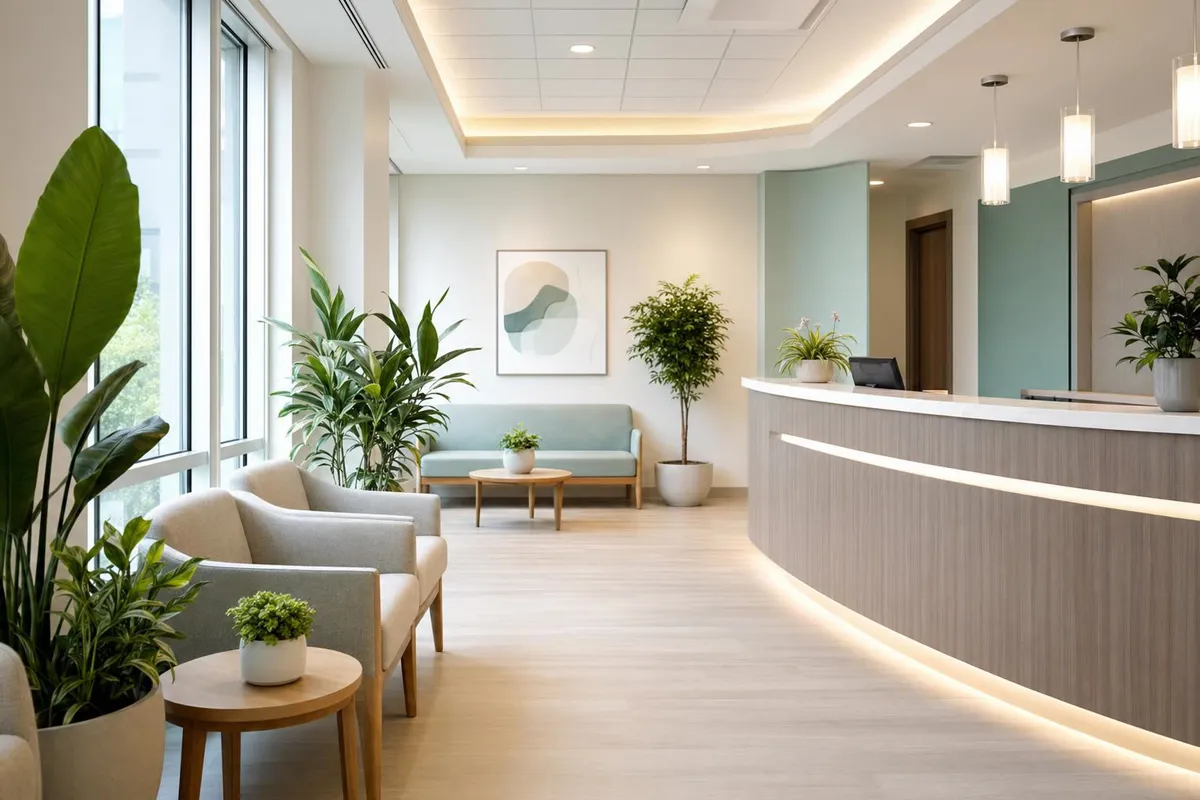
The common areas of a medical office building are the first touch-point of the patient experience, and a key consideration in healthcare property management. Lobbies, corridors, restrooms, parking facilities and wayfinding all reflect on the medical practices operating in the building. We manage common area upkeep to the high standard that clinical tenants expect, and that patients notice. That means more frequent attention cycles, higher janitorial standards in shared spaces, and maintenance of exterior elements that affect the first impression of the facility.
Lease Administration and Financial Reporting
As part of our medical office property management services, we manage the full lease administration process: tracking lease terms, escalation schedules and renewal dates; preparing annual operating expense budgets; issuing monthly CAM estimates; and completing year-end reconciliations with full backup documentation. Financial reporting is produced on a consistent schedule with the detail that property owners and their accountants need to evaluate asset performance.
Tenant Buildout and Construction Coordination
We have an in-house construction management team with direct experience coordinating medical office buildouts. When the property manager and construction manager are the same firm, the information gaps that typically cause delays and cost overruns close. Contractor selection, timeline oversight and coordination with active clinical tenants in the building are managed as a single process, not handed off between parties.
Medical Office Property Management in Detroit, Chicago and Across the Midwest
Major Midwest health systems are accelerating the shift from inpatient to outpatient care. That means more clinical volume moving into community-based medical office buildings and away from hospital campuses. For medical office property owners, the opportunity is real and so is the exposure: buildings managed to clinical standards hold occupancy as health systems expand their ambulatory networks. Buildings that fall short lose tenants who now have more options than they did five years ago, and replacing a clinical tenant costs more and takes longer than replacing any other commercial tenant type.
As part of our healthcare property management services, Farbman manages single-specialty and multi-tenant medical office buildings and both on-campus and off-campus medical facilities across Metro Detroit, Chicago and the broader Midwest.
Talk to Our Medical Office Property Management Team
Farbman works with medical office property owners and investors across Metro Detroit, Chicago and throughout the Midwest. If you’re replacing a management firm that isn’t meeting the operational standards your clinical tenants require, taking on a new medical office acquisition that needs systems and compliance attention, or evaluating what professional medical office property management would look like for your building, we’re direct about what we can do and easy to reach. Contact us to set up a consultation.
Contact Us