
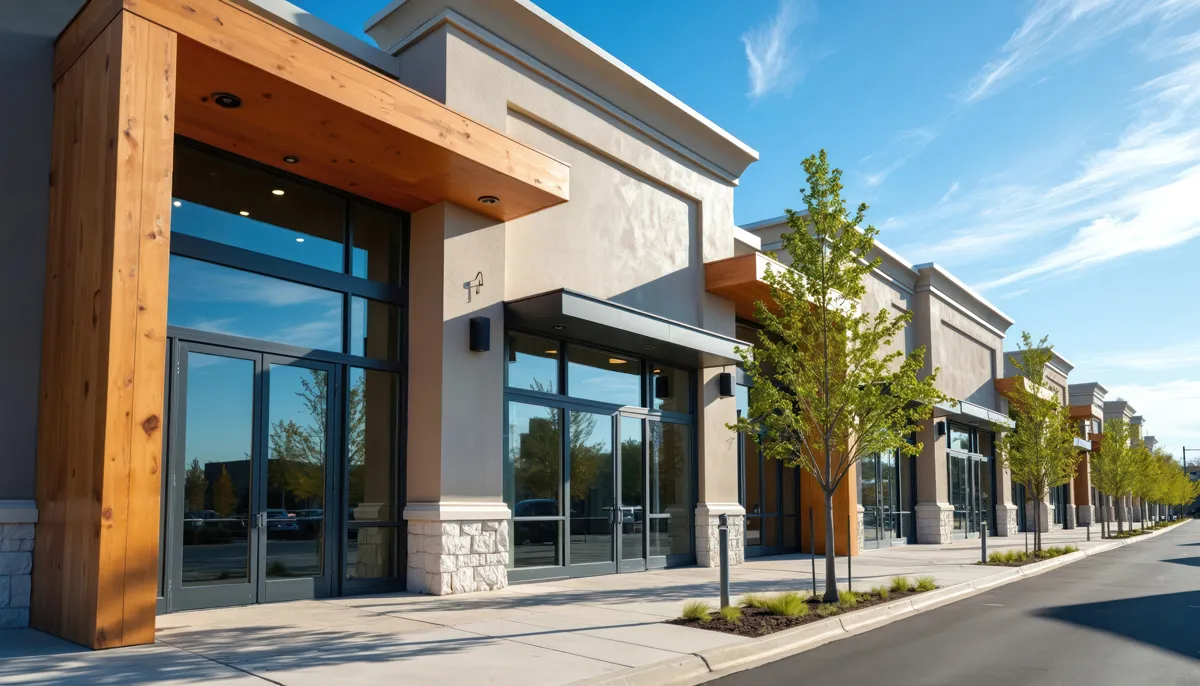
Retail Property Management
Retail property management is more complex than other asset classes. Your tenants are running customer-facing businesses, which means the condition of your property directly affects their revenue as well as their decision to renew. Parking lot conditions, signage visibility, common area cleanliness, anchor tenant health are maintenance items as well as occupancy drivers.
Most property management firms treat retail as a maintenance function. Farbman Group treats it as a performance function. That means actively managing tenant mix, monitoring anchor tenant health, coordinating with our leasing team before vacancies become problems, and making sure the physical condition of the property is working in your tenants’ favor. Farbman has managed commercial real estate across the Midwest since 1976 to provide 50 years of expertise in what keeps retail assets occupied and performing.
We provide full-service retail property management for shopping centers, strip centers, mixed-use developments, and standalone retail across Metro Detroit, Ann Arbor, Chicago, and throughout the Midwest. With over 27 million square feet of commercial space under management, we understand how to keep retail real estate assets performing.
What Farbman Group Handles for Retail Property Owners
Retail properties have interdependencies where the performance of one tenant affects the traffic of other tenants. Here’s our approach to address the needs of retail property owners:
Tenant Mix and Lease Administration
Getting the tenant mix right is the job, and keeping it right through renewals, replacements, and market shifts is the ongoing work. When a lease comes up for renewal or a tenant vacates, you can work directly with our commercial leasing team to minimize downtime and protect the center’s merchandising balance.
Common Area Maintenance and Curb Appeal
In retail, the parking lot is the first impression. As part of our retail property management services, we manage common area upkeep, including parking lot maintenance, landscaping, exterior lighting, signage, and storefront presentation standards.
This isn’t for purely cosmetic reasons as deferred maintenance in a retail center erodes foot traffic, gives tenants grounds to invoke co-tenancy remedies, and compresses your asset’s value over time. We run preventive maintenance schedules and hold vendors to standards that protect the property’s ability to attract and retain quality tenants.
Retail Vendor Management
Vendors who miss service windows in a retail property can create a tenant relations problem. Farbman oversees the full vendor network for your retail property: snow removal, sweeping, security, janitorial, landscaping, lighting maintenance, and specialty contractors. That means competitive bidding, contract management, performance oversight, and accountability when work doesn’t meet standards. Our retail property managers handle that coordination so tenants aren’t fielding complaints and you aren’t managing service calls.
Financial Reporting and CAM Reconciliation
Multi-tenant retail properties require precise financial management. We deliver monthly operating statements, variance reporting, and annual budget preparation across your portfolio. CAM reconciliations for retail properties are particularly detailed; shared costs are allocated across tenants with different lease structures, gross-up provisions, exclusions, and caps. We handle the full reconciliation process accurately and on time to reduce the tenant disputes and legal exposure that come from errors in retail CAM accounting.
Regulatory Compliance
Retail properties carry specific compliance obligations, such as ADA accessibility requirements, fire code, signage ordinances, and health and safety standards that vary by municipality. Farbman tracks compliance across your commercial property, coordinates required inspections, and manages remediation when issues arise. For multi-tenant retail centers, keeping compliance current across shared spaces and individual tenant buildouts requires consistent oversight.
Retail Properties We Manage in Michigan & Throughout the Midwest
Farbman’s retail property management services are accessible across every major format in Ann Arbor, Detroit, Chicago and beyond:
Shopping centers and strip centers: These are multi-tenant properties where tenant mix, anchor health, and common area quality drive performance. We manage the full operational and financial scope, from lease administration through CAM reconciliation.
Mixed-use with retail components: Examples include urban and suburban developments where ground-floor retail sits below residential or office. These require coordination across use types and tenant profiles with different operational expectations.
Standalone retail and single-tenant properties: These are net lease assets where the management priorities shift toward building systems, lease compliance, and long-term capital planning rather than tenant mix management.
Neighborhood and community centers: These include smaller format retail serving local trade areas, where anchor tenant stability and local market knowledge matter as much as operations.
Retail Property Management in Detroit, Ann Arbor, Chicago & Across the Midwest
Retail real estate is highly localized. Our management approach reflects the fact that the submarkets we work in have distinct consumer profiles, competitive dynamics, and occupancy drivers. What keeps a strip center occupied in suburban Detroit is not the same as what drives foot traffic to a mixed-use commercial development in Ann Arbor or a neighborhood center in Chicagoland.
In Metro Detroit, retail performance is closely tied to trade area density and the health of surrounding residential neighborhoods. Strip centers and neighborhood formats in the stronger Oakland and Macomb County submarkets hold occupancy well when managed properly. The demand is there, but tenants can be more selective. Downtown and Midtown retail tend to be driven more by foot traffic from office workers, residents, and destination spending. Farbman manages retail assets across both dynamics, and we know which submarkets can absorb vacancy quickly and which require more active leasing coordination to stay full.
In Ann Arbor, the trade area skews toward higher-income, education-sector consumers with a strong preference for local and independent retail alongside national credit tenants. That consumer profile supports higher rents in the right locations but also means tenants have many options to choose from. Retail property management in these spaces needs to be particularly responsive to tenant needs that justifies staying.
In Chicago and the surrounding suburbs, retail success is driven by traffic counts, anchor tenant strength, and the ability to attract and hold national credit tenants who have more leverage in lease negotiations than in smaller markets. CAM reconciliation and lease administration need to be precise, and vendor management has to meet higher baseline service standards.
Across these Midwest markets and beyond, the fundamentals are the same: Protect occupancy, control operating costs, and manage the asset in a way that gives tenants a reason to stay and customers a reason to come back.
Talk to Our Retail Property Management Team in Southeast Michigan
Farbman Group works with retail property owners and investors across Detroit, Ann Arbor, Chicago, and throughout the Midwest. If you’re evaluating management firms, inheriting a retail asset that needs attention, or simply want a direct read on what professional management would look like for your property, we’re easy to reach and straightforward about what we can do. Contact us today to get started.
Contact Us